
Learn about study benefits & risks
What are the possible benefits of joining this study?
Taking part in this study may or may not treat your HG NMIBC, but you may help researchers learn more about TARA-002. This could help other people with HG NMIBC in the future.
Researchers are also learning about TARA-002 in another ongoing study in participants who had not received BCG in the past. Below are the early results of this study as of April 5th, 2026:
After 6 months of treatment, 18 out of 27 participants (67%) had no signs of bladder cancer.

One year after starting treatment, 11 out of 20 participants (55%) still did not have signs of bladder cancer.

What are the possible risks of joining this study?
Based on past studies, possible side effects of TARA-002 may include:
-
Problems with your bladder and urinating in the hours or a few days after treatment, such as pain or burning in your urinary tract or urinating more times than usual
-
Feeling weak and tired (fatigue)
-
Headache
-
Fever and chills
-
Allergic reaction
-
Blood in urine
Possible side effects of chemotherapy may include:
-
Problems with your bladder and urinating in the hours or a few days after treatment, such as:
- Urinating more often than usual
-
Burning or pain when urinating
-
Red- or pink- colored urine
-
Seeing small scabs or flecks of tissue from the bladder lining in your urine
-
Feeling sick to your stomach (nausea)
or throwing up -
Fever
-
Feeling more tired than usual
This study includes tests and procedures, and some of them have risks, including:
-
Blood tests, which may cause pain or a bruise where the needle goes into your skin, fainting, and in rare cases, infection
-
A heart test (ECG), which may cause redness or irritation where patches are stuck on your skin
-
Imaging tests, which include MRI or CT scans. MRIs can be loud, and both tests require you to lie still on a scan table in an enclosed space, which could make you feel anxious.
-
Biopsies, which may cause bleeding and pain where the sample is taken and, in rare cases, infection
-
The study doctor will insert a tube into your urethra, which may cause some discomfort and, in rare cases, slight pain or bleeding and risk of infection. This will be done to give you the study treatment and to take images of your bladder or kidneys.
This study includes tests and procedures, and some of them have risks, including:
-
Blood tests, which may cause pain or a bruise where the needle goes into your skin, fainting, and in rare cases, infection
-
A heart test (ECG), which may cause redness or irritation where patches are stuck on your skin
-
Imaging tests, which include MRI or CT scans. MRIs can be loud, and both tests require you to lie still on a scan table in an enclosed space, which could make you feel anxious.
-
Biopsies, which may cause bleeding and pain where the sample is taken, and in rare cases, infection
-
The study doctor will insert a tube into your urethra, which may cause some discomfort, and in rare cases, slight pain or bleeding and risk of infection. This will be done to give the study treatment and to take images of your bladder or kidneys.
Learn more about HG NMIBC
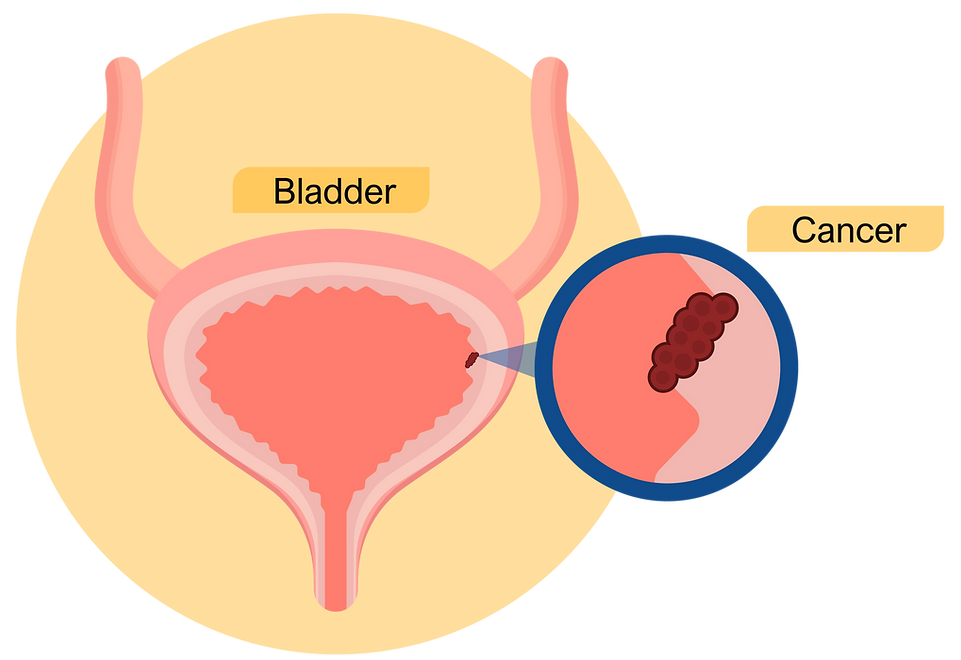
What is non-muscle invasive bladder cancer (NMIBC)?
Non-muscle invasive bladder cancer (NMIBC) is cancer in the inner lining of the bladder that has not grown into the thicker muscle layer of the bladder.
High-grade (HG) means the cancer cells look more unusual, grow quickly, and are more likely to come back or get worse after treatment.
How is HG NMIBC treated?
The standard treatment for HG NMIBC is Bacillus Calmette-Guérin (BCG). BCG is put into the bladder as a liquid through a catheter (intravesical therapy). It activates immune system cells in the bladder to attack cancer cells.
There is currently a global shortage of BCG, which means there is not enough BCG to treat everyone with HG NMIBC. Some people may not be able to get BCG because of other health conditions, or because they cannot tolerate (deal with) the side effects.
People with HG NMIBC who cannot receive BCG often get chemotherapy, such as mitomycin C or gemcitabine.

Learn more about bladder cancer
